Reddit SEO
 Wordpress
 WooCommerce
 Shopify
 Magento
 BigCommerce
 HubSpot
 Neto
Neto
 Headless
 ChatGPT
 Gemini
TL;DR
-
Across 100 Australian eCommerce brands, AI search referrals skew toward expensive, high-consideration products. ChatGPT's overall order value barely beats Google organic, but the outliers carry the story: furniture, appliances, fitness equipment and jewellery saw AI-referred orders worth $900 to $2,500.
-
One home appliance retailer turned roughly 1,500 ChatGPT sessions into about $90,000 in revenue. That is over $60 per session, more than 20 times the Google organic average.
- High order value is not the same as high conversion. To capture big-ticket AI traffic you need product pages with visible pricing, structured specs and a landing page that matches what the AI recommended.
In this blog, we'll explore what 100 Australian eCommerce brands reveal about AI search, why ChatGPT is driving larger purchases, and how marketers can capitalise on the trend. This is what we'll cover:
-
AI Search Visitors Spend More Per Order Than Your Average Organic Visitor
- AI Search Sends the Big Orders, Not the Browsing
- Why AI Buyers Skip the Comparison Phase
- Which Categories See the High-Ticket Effect?
- High Order Value Is Not the Same as High Conversion
- How to Capture High-Ticket AI Traffic
- A Real Example: Hush Puppies
- Frequently Asked Questions
AI Search Visitors Spend More Per Order Than Your Average Organic Visitor
When someone arrives from ChatGPT, they tend to buy bigger things. Across our study of 100 Australian ecommerce brands, AI-referred customers in high-consideration categories placed orders worth $900 to $2,500, far above the typical organic basket.
We pulled 21 months of GA4 data (July 2024 to March 2026) covering roughly 8.35 million Google organic sessions, 340,000 ChatGPT sessions and nearly $700,000 in directly attributed AI search revenue.
One pattern stood out clearly enough to plan around:
AI search does not send browsers. It sends buyers, and the orders are larger.
We call this pattern the High-Ticket Effect through AI Search
AI Search Sends the Big Orders, Not the Browsing
In high-consideration categories, AI-referred orders are worth $900 to $2,500. The headline average hides it: ChatGPT's overall average order value (around $220) is barely ahead of Google organic (around $215).
Break revenue down by category and the high-ticket pattern is obvious:
| Category | ChatGPT AOV | Transactions | Revenue |
| Jewellery | ~$2,500 | 1 | ~$2,500 |
| Furniture (premium) | ~$2,000 | ~15 | ~$33,000 |
| Home appliances | ~$1,900 | ~50 | ~$90,000 |
| Bridal | ~$1,600 | 3 | ~$5,000 |
| Furniture (online) | ~$1,100 | ~10 | ~$8,500 |
| Fitness equipment | ~$900 | ~70 | ~$63,000 |
| Lighting | ~$550 | ~5 | ~$2,500 |
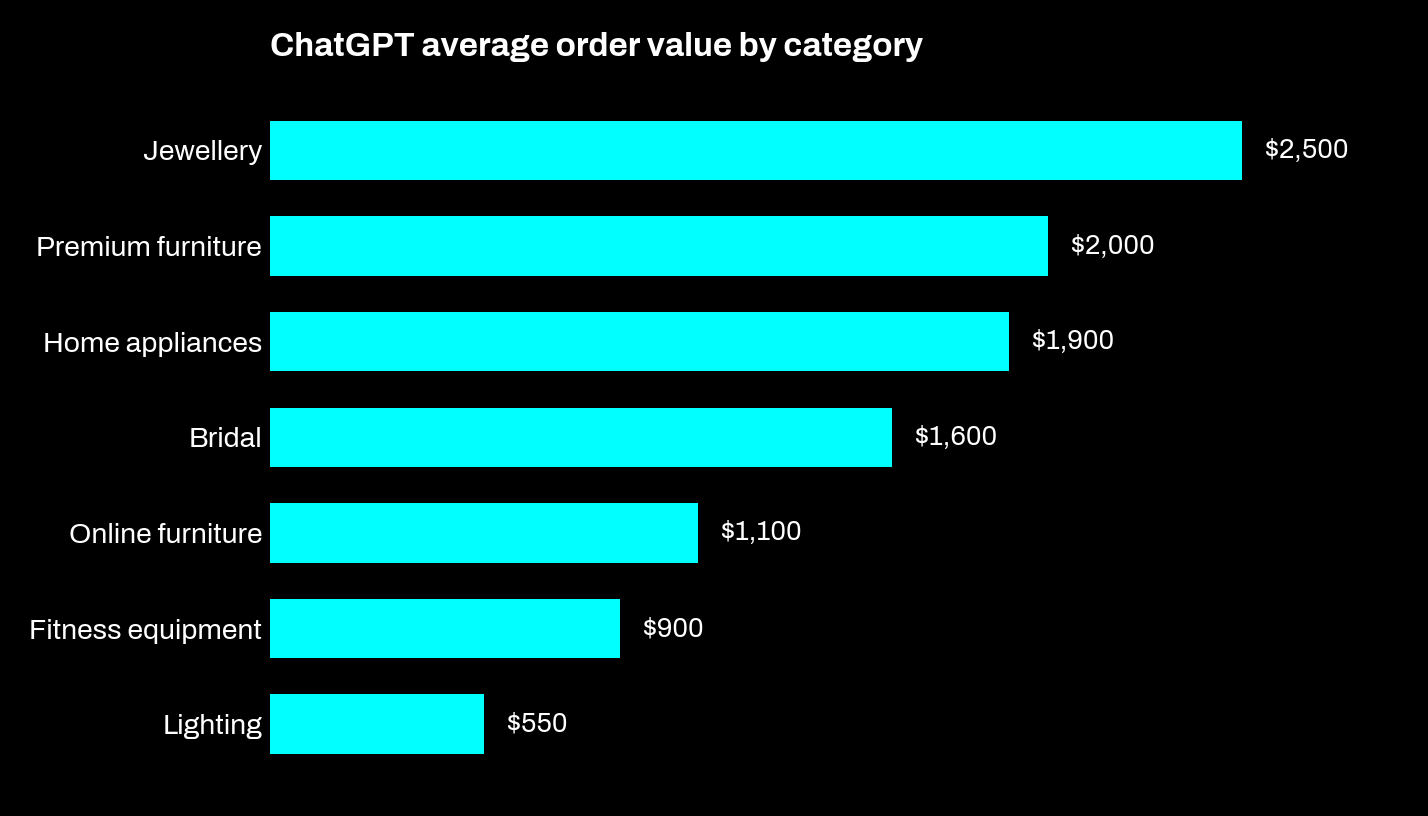
Chart 1: ChatGPT average order value by category.
Brands selling high-consideration products are seeing AI-referred customers spend at a level that changes the maths on the channel. One home appliance retailer is the clearest case. Roughly 1,500 ChatGPT sessions generated about $90,000 in revenue. That works out to over $60 of revenue per session, more than 20 times the Google organic average of around $2.65.
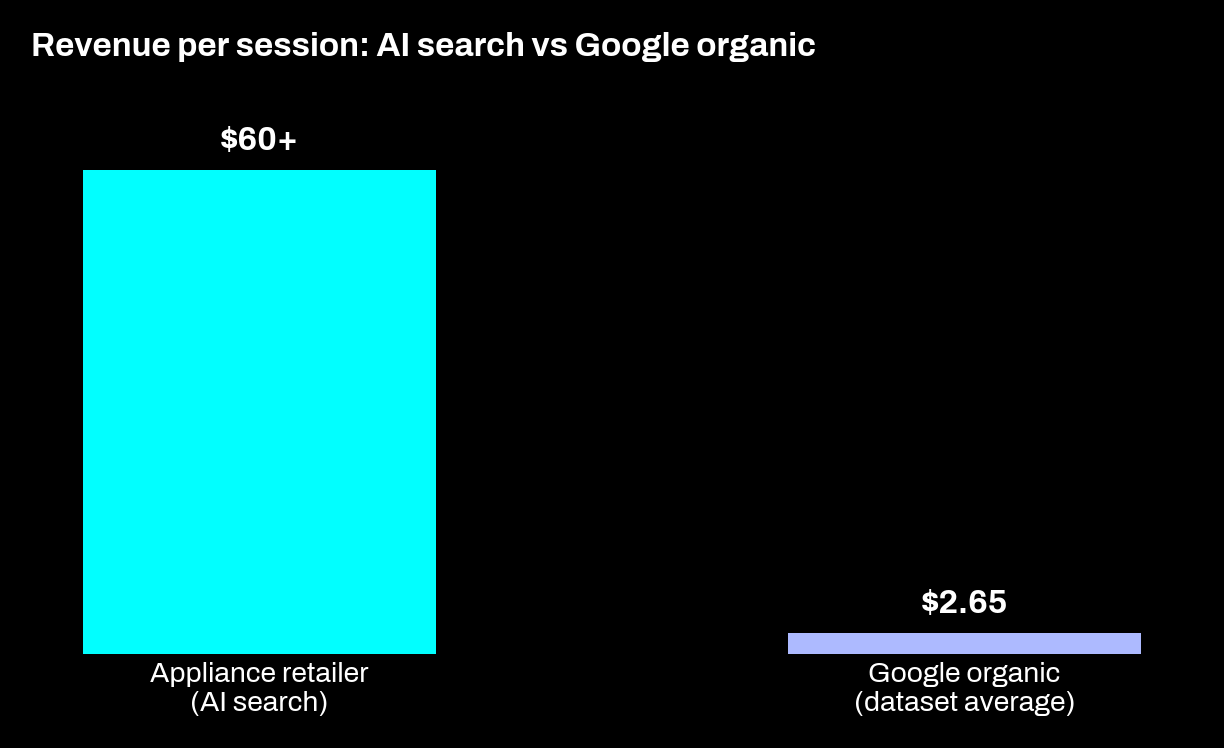
Chart 2: Revenue per session, one home appliance retailer's AI search traffic versus the Google organic average.
That is not a casual browsing audience. Those are people who asked an AI to help them choose, received a specific recommendation, and bought it.
Why AI buyers Skip the Comparison Phase
AI buyers spend more because the comparison shopping is already done before they arrive. The AI did it for them.
When someone types "what's the best sofa bed under $2,000 in Australia" into ChatGPT, they are not at the start of their journey. They are near the end of it. The AI reads the reviews, compares the specs, weighs the price points and hands back a shortlist, often a single recommendation. The comparison shopping that normally happens across a dozen browser tabs has already been done.
By the time that person lands on your product page, the decision is mostly made. They are not just exploring, they’ve got their wallet ready to purchase.
Shopify's own research into AI search points the same way: shoppers arriving from AI tools tend to enter the buying journey later and with clearer intent than traditional search visitors.
Our behavioural data backs this up. ChatGPT visitors view fewer pages per session (around 3.15) than Google organic visitors (around 3.70), and they bounce slightly more often. They are not taking a scenic route through your content. They land on a specific product or category page, check that it matches what the AI told them, and either buy or leave.
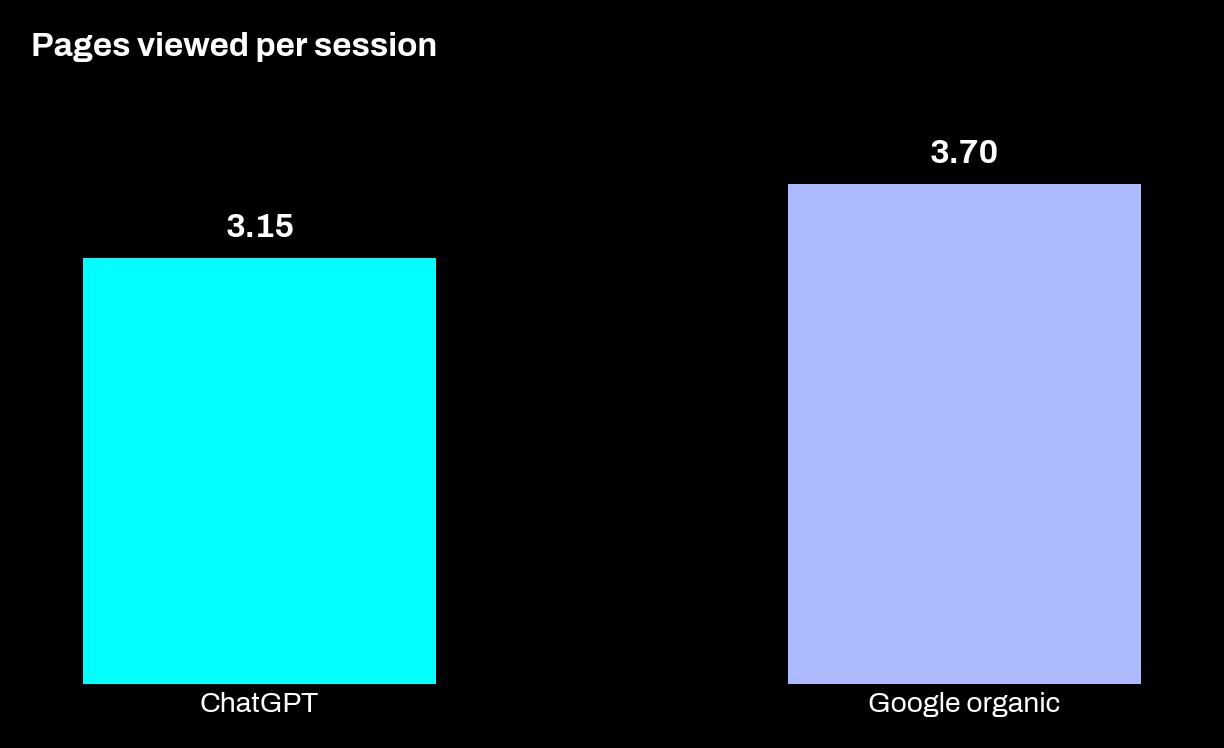
Chart 3: Pages viewed per session, ChatGPT versus Google organic
For a high-ticket product, that compressed journey is a gift. The hardest part of selling a $2,000 item, the research and reassurance, has been outsourced to the AI.
Your job is to not get in the way.
Which Categories See the High-Ticket Effect
The High-Ticket Effect is concentrated in high-consideration categories with clear specifications. Based on our data, these categories punch well above their weight on AI-referred order value:
| Category | What the data shows |
| Furniture and homewares | Highest order values in the dataset ($1,000 to $2,000), lower volume. High consideration, high reward. |
| Home appliances | Strong order value (around $1,900) and a healthy conversion rate. The standout performer for revenue per session. |
| Specialty equipment | Fitness gear, outdoor equipment and tools, typically $500 to $2,000. The AI does the comparison shopping; the buyer arrives ready. |
| Jewellery |
Very high order value, very low volume. AI is becoming a genuine discovery channel here. |
Broad, aspirational or custom categories behave differently. Fashion and apparel attract high AI traffic volume but convert poorly. Bridal and luxury generate large session counts and almost no online sales, because the purchase still happens in a showroom.
Those categories get AI visibility. They do not get the big-ticket AI orders.
If you sell in one of them, benchmark AI search on awareness, not direct revenue.
High Order Value Is Not the Same as High Conversion
A high average order value does not guarantee a high conversion rate. This nuance matters for anyone reporting AI search performance to a board.
In our dataset, premium furniture earned a strong average order value close to $2,000 from ChatGPT, while converting at about 0.3%. That low conversion rate is what you would expect from a considered, high-deliberation purchase, not a sign the channel is underperforming.
Home appliances, a faster decision for most buyers, converted far better at around 3.3%. Same broad high-ticket bucket, very different conversion behaviour, and both patterns are normal for their category.
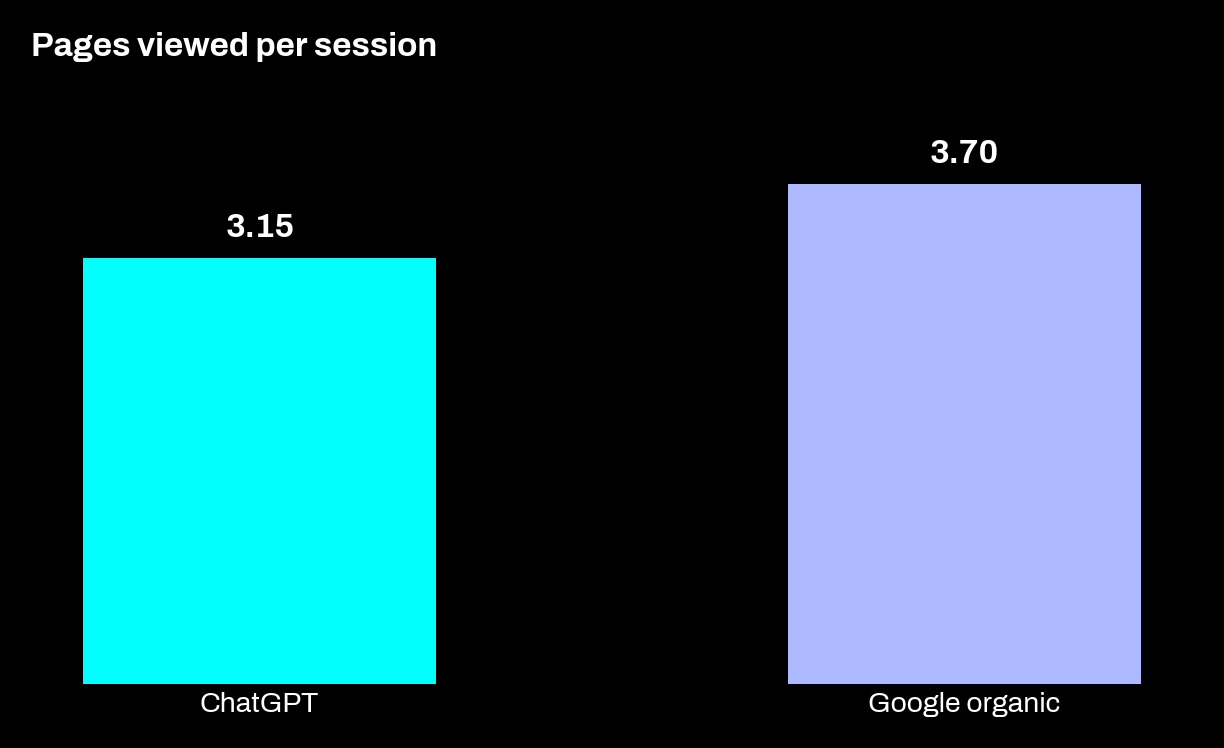
Chart 4: ChatGPT conversion rate, premium furniture versus home appliances. Two high-ticket categories, very different conversion.
The deciding variable is the landing page match. We saw this play out sharply in the fashion category.
Two brands had similar ChatGPT session volumes. One converted 30-plus visitors into nearly $6,000 in sales.
The other converted zero. Same traffic source, same category, opposite outcomes, driven entirely by whether the landing page matched the product the AI recommended and whether the purchase path was clear.
If the AI names a specific product and the visitor lands on a page for exactly that product, with the price and availability visible, they convert.
If they land on a homepage or a broad category page and have to start hunting, they bounce.
For a high-ticket buyer who already made the decision, a mismatch is not a minor friction. It is the whole sale.
How to Capture High-Ticket AI Traffic
Capturing this traffic is not a new discipline. It is eCommerce SEO done properly, with the product data tightened so AI models can read, trust and recommend your catalogue.
The brands winning AI search are not running an "AI strategy". They are running solid SEO, and AI visibility follows.
That is the core argument across our wider work on AI SEO.
Four practical moves, in order of impact:
- Make every product page answer three questions instantly. What is this, what does it cost, can I buy it right now. AI sends buyers to specific products. If the price, stock status and key specs are not immediately visible, the high-intent visitor bounces and the order is gone.
- Structure your product data. Clear, descriptive titles rather than product codes. Specifications in structured HTML, not buried in a PDF or baked into an image. Descriptions that answer real buyer questions. This is the raw material AI models parse when they decide what to recommend. Google's own AI optimisation guidance makes the same point: machine-readable, well-structured content is what feeds AI features, and it is the same work that drives traditional search.
- Implement and maintain product schema. Product, Offer and AggregateRating markup gives AI systems an unambiguous read of your catalogue. Our deeper guide to eCommerce schema covers the variant-level detail that matters for stores with multiple SKUs per product.
- Fix the technical foundation. If Googlebot cannot crawl your site cleanly, the retrieval systems feeding AI models generally cannot either. Crawlability, page speed and a clean site architecture are the access layer. Our technical SEO services exist for exactly this. While you are there, make sure your robots.txt is not blocking GPTBot, ChatGPT-User, Google-Extended, anthropic-ai or PerplexityBot.
One more lever for marketing managers building the budget case: Google Merchant Center now powers free organic product listings, not just paid Shopping ads.
A well-structured product feed expands your surface area in Google's Shopping tab and in the product carousels that appear inside AI Overviews, at no extra media cost.
Tracking It Just Got Easier: GA4's New AI Assistant Channel
You can now run the analysis in this article on your own data without touching a regex. Until last week that was not true.
The tooling around AI search has moved fast in the past week, and the change that matters most for measurement landed on 13 May 2026. Google added AI Assistant as a default channel group in GA4.
Visits from ChatGPT, Gemini, Claude and other assistants are now tagged automatically with an "ai-assistant" medium and grouped on their own, with no setup required.
Before this, seeing AI search traffic meant manual work.
Those visits landed in "(direct) / (none)" or were swept into organic, and isolating them meant building custom channel groups and source or medium regex filters by hand. Plenty of brands never did it, so they had no idea how much AI traffic they were already getting.
For anyone asking "is AI search sending us the big orders?"That hardest step is now gone.
Open GA4, select the AI Assistant channel, and read its sessions, conversion rate and average order value next to Google organic and paid.
The high-ticket pattern in this article is something any brand owner or marketing manager can now confirm on their own store in a few minutes.
A Real Example: Hush Puppies
StudioHawk's work with Hush Puppies shows what tightening product data does for both rankings and revenue.
Implementing structured product markup across the catalogue drove a 45% increase in product page revenue, a 29% lift in users, and 150% growth in top-three positions.
The mechanism is the same one that wins AI search recommendations: when product data is clean, structured and machine-readable, the systems that decide what to surface,
Google and AI models alike, can read it with confidence, clean data is the foundation both channels are built on.
Frequently Asked Questions
Does AI search traffic actually convert?
It depends on what you sell. For specific, purchasable products with clear pricing, AI search converts well, sometimes at 3 to 8%, because the visitor arrives with a recommendation already in hand. For aspirational or high-touch categories like bridal and fashion, AI drives awareness rather than direct sales. Across all 100 brands the aggregate ChatGPT conversion rate (around 0.9%) sits just below Google organic, but that average hides two very different populations.
Why is my AI search order value higher than my Google organic order value?
Because AI search visitors have usually finished their comparison shopping before they reach you. When a customer asks an AI to recommend the best option in a category, the AI weighs the choices and returns a shortlist. The visitor arrives in confirm-and-buy mode, which skews toward considered, higher-value purchases.
Which products sell best through ChatGPT?
High-consideration categories with clear specifications: furniture, home appliances, fitness and specialty equipment, and jewellery. These are products where the buyer wants help choosing, the AI can compare options meaningfully, and the order value is high enough to matter.
Do I need a separate strategy to optimise for AI search?
No. There is no ChatGPT Ads platform and no "AI search optimisation" service that works independently of SEO. The brands winning AI search are doing ecommerce SEO well: structured product data, strong technical foundations and genuine authority. Fix those and AI visibility follows.
Getting ahead of the High-Ticket Effect
The High-Ticket Effect rewards brands that get the fundamentals right: structured product data, a clean technical base, and product pages that match what the AI recommends. Now that GA4 makes the traffic visible without setup, the gap between brands that act on it and brands that ignore it will only widen. If you want help putting that foundation in place, talk to StudioHawk's eCommerce AI SEO agency team, or get in touch for a read on where your store stands in AI search today.