It’s 2026, and the reality is: people still search, but they don’t always click.
Questions now turn into conversations. Conversations turn into answers.
Those answers get stitched together across AI systems, search engines, video, reviews, and brand mentions, often before a user ever reaches a website.
This shift changes what visibility means. Ranking a page still matters; being included in the answer matters even more.
This is why so many teams feel stuck at the moment:
- Traffic looks unstable.
- Attribution makes less sense.
- Old reporting models fail to explain what is happening.
The work still drives demand, but the signals moved.
This article breaks down the SEO and AI search trends we believe will shape 2026, and what they mean for teams trying to grow in an increasingly fragmented search landscape.
- Keywords Are “Dead” & Topical Authority Takes Over.
- AI SEO Goes Mainstream
- Search Becomes Platform Agnostic
- The Consideration Era Becomes the Real Battleground
- Reddit Loses Favour as Manipulation Catches Up
- Digital PR Becomes Core SEO Infrastructure
- Google Pushes Interactive AI Search
- Measurement Shifts From Traffic to Demand and Revenu
1. Keywords Are “Dead” & Topical Authority Takes Over.
Keywords still exist; they just stopped being the primary lens for SEO.
In AI search, people don’t enter the same query and receive the same result. The same prompt can generate thousands of variations, and each prompt changes based on context, urgency, history, and preference.
AI systems do not rank pages solely by matching keywords. They look for depth, coverage, consistency, and credibility across an entire topic.
Topical authority holds up because it survives variation. When one question turns into many, the brand with the deepest coverage will keep appearing.
Brands relying on thin pages and isolated keyword targets get replaced mid-journey, often before the user ever reaches a buying moment.
What changes
- One search becomes many follow-up questions
- Exact phrases lose predictive value
- Gaps in coverage get filled by competitors
What to do
- Stop planning content around keyword lists
- Plan around problems, decisions, and intent chains
- Cover topics end-to-end, not page-by-page
- Answer the obvious question, then the next one, then the one after that
Harry Sanders - SEO will change in 2026 (What will die & what will dominate)
2. AI SEO Goes Mainstream
This is where the lines settle.
In 2026, the industry stops splitting hairs between labels. SEO, AI SEO, AI search. They collapse into one discipline.
Visibility now depends on how well your content performs inside AI systems AND search results. Answer Engine Optimisation and Generative Engine Optimisation stop being snazzy acronyms used by the specialist community and start being practical requirements for brands.
Content now has to work in two modes at once:
- It needs to rank in the traditional search results
- It needs to survive extraction inside AI answers
Content that sounds appealing but avoids saying anything concrete will be skipped. AI favours content that makes clear claims, supports them, and resolves intent.
What changes
- Pages compete for inclusion inside AI answers
- Structure matters as much as substance
- Clear, concise explanations outperform long introductions
What to do
Write content that can be quoted without losing meaning.- Use clear headings.
- Provide direct answers.
- Add short summaries near the top
- State who the content is for.
- State who it is not for.
- Compare options.
- Explain trade-offs.
Your content needs to be readable by humans first, but structured in a way that AI systems can reliably understand and reuse.
 Download our AI Search white paper for more information
3. Search Becomes Platform-Agnostic
Discovery, comparison, and decision now spread across AI tools, Google, video platforms, reviews, forums, and social content. Users move between them without thinking consciously about the handoff.
They absorb the answer, then act elsewhere.
This is why attribution is becoming so unreliable. The influence happens upstream, but the conversion shows up later. AI accelerates this shift by doing the comparison work for people.
What used to require power users to search Reddit, watch videos, and scan reviews now happens automatically inside the interface.
If your brand is missing from those off-site signals, it gets filtered out before the final decision.
What changes
- Visibility extends beyond your website
- Influence matters more than clicks
- Gaps in off-site presence get filled by competitors
What to do
Stop treating SEO as a site-only channel.- Make sure your brand shows up where people research and compare.
- Invest in signals beyond your own web pages:
a. Reviews.
b. Video.
c. Social media commentary.
d: Third-party content.
Brand mentions that prove you exist outside your pages.
4. The Consideration Era Becomes the Real Battleground
.png?width=3840&height=2160&name=SH_Mind_Map_Graphic%20(2).png) This framework maps the new consideration journey across B2B and B2C — highlighting the key signals that influence visibility in AI search, and where trust is built (or lost) in today’s marketing landscape.
This framework maps the new consideration journey across B2B and B2C — highlighting the key signals that influence visibility in AI search, and where trust is built (or lost) in today’s marketing landscape.
Discovery is no longer the hardest part. Consideration is.
AI enhances the process during the middle stages of the user journey, which is the phase where options are compared and filtered down.
Comparison, evaluation, validation, and reassurance now happen before a user ever reaches a website. Often, users make their decisions before they even click on the final link.
This phenomenon is why brands feel like they are “losing” traffic while still seeing demand. The decision-making process hasn’t disappeared; it occurs earlier and in different locations.
AI systems utilise reviews, third-party commentary, videos, forums, and brand mentions to determine which options are worthy of display. During this phase, the user filters out your brand if it doesn't provide sufficient proof before they reach a buying moment.
The consideration phase used to be invisible. In 2026, it becomes decisive.
What changes
- More decisions happen before the click
- Brand consistency matters more than first impressions
- Weak proof eliminates options early
What to do
Create content that helps people decide.
- Comparisons.
- Objections.
- Trade-offs.
- Real reviews.
- Third-party validation.
Answer the doubts that stop action.
5. Reddit Loses Favour as Manipulation Catches Up
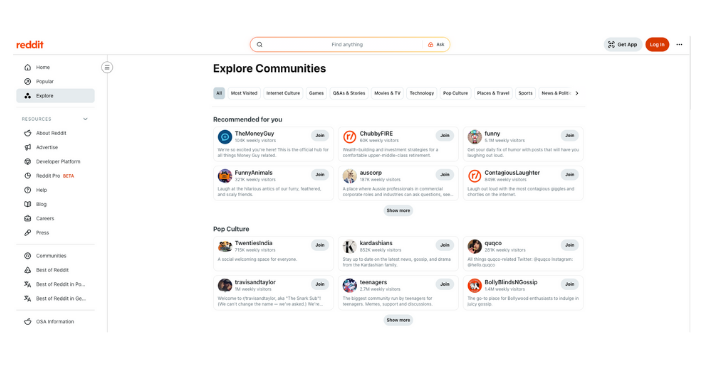
Reddit has carried outsized influence in AI answers.
For a while, it made sense. The platform offered real language, strong opinions and messy, human discussion.
AI systems leaned on it because it looked authentic, but that dynamic is changing. Reddit is now saturated with coordinated posting, brand seeding, affiliate spam, and low-effort manipulation.
The patterns are no longer subtle, and systems trained to detect behaviours at scale will adjust.
What once looked like a grassroots discussion now looks manufactured.
What changes
- Reddit citations lose reliability
- Spam and coordinated behaviour become easier to detect
- Over-reliance on a single community weakens AI answers
What to do
- Don’t build visibility on borrowed trust
- Avoid strategies that depend on gaming platforms you don’t control
- Focus on signals that compound over time and survive scrutiny
6. Digital PR Becomes Core SEO Infrastructure
Digital PR stops being optional.
As AI systems move away from simple link counting and towards reputation interpretation, public proof becomes one of the strongest visibility signals available.
These signals are harder to fake and easier for AI systems to trust.
This is why SEO keeps drifting closer to earned media and communications. AI answers tend to surface brands that receive widespread attention more frequently.
No matter how clean the on-page work looks, brands that only publish on their own site struggle to break through.
What changes
- Reputation signals outweigh raw link volume
- Brand mentions matter even without followed links
- Authority compounds across platforms
What to do
Treat DPR as a long-term infrastructure
- Earn coverage by having something worth referencing:
a. Original data.
b. Clear points of view.
c. Real expertise.
d. Practical examples others can cite.
If no one is talking about your brand, AI systems have very little to trust.
7. Google Pushes Interactive AI Search
Google will not win by copying chat interfaces.
In 2026, expect Google to lean harder into interactive searches rather than static AI Overviews or AI Mode.
That means more product exploration, visual comparison, virtual shopping, and try-on style experience. Search becomes something users do with Google, not just something they ask.
This is their redemption run after the voice search hype of 2017 - 2019.
AI answers still exist, but they sit inside richer flows designed to keep users engaged and confident before they act.
What changes
- Search results become more experiential
- Commerce and product data move earlier in the journey
- Visual and structured inputs carry more weight
What to do
Prepare for a search that expects interaction.- Improve product data quality.
- Add structured data and attributes.
- Use visuals that explain fit, use, and outcomes.
8. Measurement Shifts From Traffic to Demand and Revenue
AI answers increasingly absorb search intent, while comparison happens off-site. Conversions arrive later, often under brand search or direct traffic.
This is why traditional SEO reporting can feel misaligned. Keyword rankings and click volume cannot explain the influence that happens before the click.
In 2026, teams that rely solely on traffic metrics will underinvest in the work that actually drives growth.
Teams that follow demand, not just clicks, will scale faster.
What changes
- Clicks underreport real influence
- Last-touch attribution misleads decisions
- Rankings stop correlating cleanly with revenue
What to do
Anchor ROI measurement to signals that survive fragmentation.- Track brand demand over time.
- Watch direct traffic trends.
- Measure lead quality and revenue.
- Use assisted conversions as context
What This Means for SEO in 2026
These aren’t abstract predictions we’re making. They’re patterns already shaping how visibility, consideration, and demand work in AI search today.
So, what does this mean for SEO in 2026?:
- Building topical authority instead of chasing single keywords
- Writing content designed for inclusion
- Showing up across platforms during the consideration phase
- Earning a reputation through digital PR
- Preparing for Google’s new interactive search
- Measuring demand and revenue instead of AI signals
- Focusing on usefulness, clarity, and credibility at scale aligns your strategy with the direction of SEO and AI Search.
If you need a partner to help navigate these shifts, we’re always here for a conversation.